
 By Jeff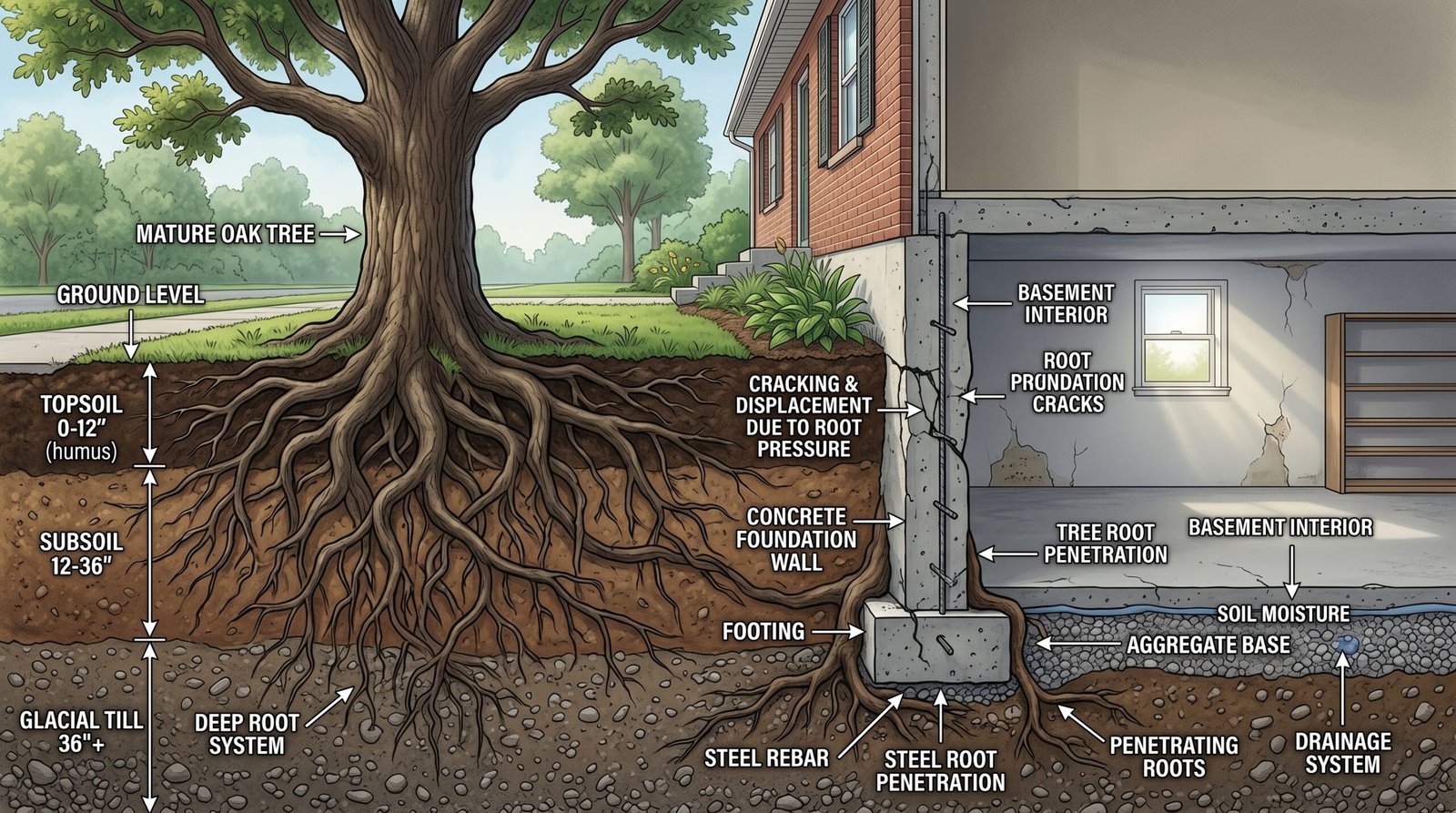
Trees add beauty, shade, and value to residential properties. They improve air quality, reduce energy costs, and create a more inviting outdoor environment. However, while the visible parts of a tree often receive the most attention, its root system can have a significant impact on nearby structures, including your home’s foundation. Understanding how tree roots interact with foundations can help homeowners prevent costly damage and maintain a healthy landscape. ‘
How Tree Roots Grow
Tree roots serve several important functions. They anchor the tree, absorb water and nutrients, and store energy. Contrary to popular belief, most tree roots do not grow deep into the ground. Instead, they spread outward near the soil surface, often extending well beyond the tree’s canopy.
The growth pattern of roots depends on factors such as tree species, soil conditions, moisture availability, and nearby obstacles. Roots naturally seek areas where water and nutrients are abundant, which can sometimes bring them closer to foundations, sidewalks, driveways, and underground utilities.
Can Tree Roots Damage Foundations?
Tree roots are often blamed for foundation problems, but the reality is more complex. In many cases, roots do not directly break through solid concrete foundations. Instead, they can contribute to foundation issues by affecting the soil surrounding the structure.
Certain soil types, especially clay soils, expand when wet and shrink when dry. Large trees can absorb significant amounts of moisture from the soil, causing it to shrink. This soil movement may lead to foundation settling, cracks, or uneven structural support over time.
Roots can also exploit existing cracks or weak points in foundations. If a small crack is already present, roots may grow into the opening and gradually make the problem worse.
Signs of Potential Root-Related Foundation Issues
Homeowners should be aware of warning signs that may indicate foundation movement or root-related concerns. Some common signs include:
- Cracks in foundation walls
- Uneven or sloping floors
- Cracks around doors and windows
- Doors or windows that stick or fail to close properly
- Gaps between walls and ceilings
- Visible roots growing close to the foundation
While these symptoms do not always indicate root damage, they should be investigated promptly to prevent further complications.
Tree Species Matter
Not all trees pose the same risk to foundations. Larger species with extensive root systems are generally more likely to affect nearby structures. Some fast-growing trees develop aggressive roots that travel long distances in search of moisture.
Examples of trees that may require careful placement include:
- Silver Maple
- Willow
- Poplar
- Elm
- Norway Maple
Smaller ornamental trees typically have less extensive root systems and may be better suited for planting closer to homes. Before planting a new tree, homeowners should research the mature size and root characteristics of the species being considered.
Proper Tree Placement Is Essential
One of the best ways to prevent future foundation problems is proper planning before planting. Trees should be positioned far enough from buildings to accommodate their mature size.
As a general guideline:
- Small trees should be planted at least 10 feet from foundations.
- Medium-sized trees should be planted 15 to 20 feet away.
- Large trees may require 20 to 30 feet or more of clearance.
These distances may vary depending on species and site conditions. Consulting an arborist before planting can help ensure trees are placed appropriately for long-term growth.
Managing Existing Trees Near Foundations
Many homeowners already have mature trees growing near their homes. Fortunately, removing a tree is not always necessary. Regular inspections and maintenance can often reduce risks while preserving the benefits that trees provide.
Professional pruning can help maintain tree health and reduce stress on the root system. Monitoring soil moisture levels can also minimize excessive soil shrinkage around foundations. In some situations, root barriers may be installed to direct root growth away from structures.
If concerns arise, a qualified arborist can assess the condition of the tree and determine whether corrective action is needed. Homeowners seeking professional tree service in Ottawa can benefit from expert evaluations that balance tree preservation with property protection.
The Risks of Cutting Roots
When roots appear too close to a foundation, some homeowners may be tempted to cut them. However, root pruning should never be performed without professional guidance.
Removing large roots can destabilize a tree, increasing the risk of failure during storms or high winds. Excessive root cutting may also weaken the tree’s health by limiting its ability to absorb water and nutrients.
A certified arborist can determine whether root pruning is safe and recommend the best approach for managing potential conflicts between trees and structures.
What Happens When a Tree Must Be Removed?
In certain situations, tree removal may be the safest solution. Trees that are severely damaged, diseased, structurally unstable, or causing significant property concerns may need to be removed to prevent future issues.
After removal, the remaining stump and root system should also be addressed. Leftover stumps can become tripping hazards, attract pests, and interfere with landscaping projects. Professional tree stump removal Ottawa services help eliminate these obstacles and prepare the area for future use.
Removing the stump can also reduce the likelihood of unwanted regrowth and improve the appearance of the property.
Preventive Maintenance Saves Money
Foundation repairs can be expensive and disruptive. Fortunately, many root-related problems can be avoided through proactive tree management.
Homeowners should:
- Schedule regular tree inspections.
- Monitor large trees growing near structures.
- Address signs of foundation movement early.
- Choose appropriate tree species for planting locations.
- Consult professionals before cutting roots or removing trees.
Taking these preventive measures can help protect both the landscape and the home’s structural integrity.
Conclusion
Trees and foundations can coexist successfully when homeowners understand how root systems behave and plan accordingly. While tree roots do not automatically cause foundation damage, they can contribute to soil movement and structural issues under certain conditions. Proper tree selection, strategic planting, routine maintenance, and professional assessments all play important roles in preventing costly problems.
By staying informed and addressing concerns early, homeowners can enjoy the many benefits of healthy trees while protecting one of their property’s most valuable assets—the foundation.